Thursday, June 10, 2010

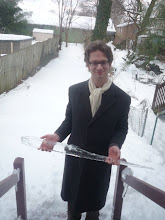
The Vermont national character

I am from Vermont. Vermont is not a place that many people are from and most people have some pretty strange conceptions about what it is like. So in this essay I shall explain the national character of Vermont. I say ‘national’ because, while I am very proud of my state, like so much of New England, Vermont barely counts as America any more (I view this as a good thing in some ways).
            Most Vermonters are hippies. But we aren’t your typical hippies. No, we’re the sorts of hippies who climb mountains, stand on the summit in a snowstorm, and let out the great, half-deranged Vermont ‘YEEEEEAAAAARRRRRGH!!!!!’ as if to say ‘we’re here, we’re Vermonters, come and get us.’ This is why we were the first state to legalise civil unions for gays, why we fought just as hard against New York and New Hampshire as we did against Britain, and why we retained our independence until 1791 as the Vermont Republic. Our governor during this time was Thomas Chittenden, who only had one working eye because of an incident with a catamount.
            This seeming paradox is due to Vermont’s history. For most of our history we were peopled by proud and hardy mountaineers and farmers—first Algonquin and Abenaki Indians, then the French, then settlers from Connecticut. Then in the 1960s Vermont started to attract hippies because of the forests and mountains (the state’s name comes from the French for ‘green mountain’). In true New England fashion, instead of clashing, these groups merged. Hence proud and hardy hippies who don’t take shit from anybody.

Simoun drinking game

Take a shot:

  • Every time specific reference to sex change is made.
  • Every time you want to slap a religious official.
  • Every time you want to slap a secular official (warning: in the later stages of the show, this may result in alcohol poisoning).
  • Every time you find yourself getting emotionally invested in a character who hasn’t had much screen time until now.
  • Every time an Argentine or Plumbish character speaks in their native language (Japanese played backwards).
  • Every time a new dodgy translation of an honorific comes up.
  • Every time Aaeru does something insensitive.
  • Every time Simoun makes you cry or feel feelings associated with crying.
  • Every time we see a Ri Maajon that hasn’t been seen before.
  • Every time a straight couple appears onscreen, drink the whole bottle (don’t worry; this only happens once).

Simoun character design grades

THESE ARE NOT GRADES FOR THE CHARACTERS, JUST THEIR APPEARANCE.

Sibylla Mamiina
In A World…where braids are a plot point, Mamiina’s character design, especially her hairstyle, stands out. This character is arguably the animation director, prominent design artist Nishida Asako’s, masterpiece. As Mamiina is introduced as a needlessly belligerent and selfish character, she scowls and postures and looks like every self-absorbed bitch we ever had to deal with in high school; yet as her character develops her design softens into something truly beautiful. It’s hard to make hair look either threatening or pathos-filled, but Mamiina’s manages to be both. A+

Sibylla Yun
Yun is introduced in the same episode as Mamiina and follows a similarly tragic and sacrificial character arc. Her blonde hair is of a complementary colour to Mamiina’s dark blue and as they are first seen together this serves to underline their superficially very different personalities. Also, she’s just plain pretty. A

Sibylla Aaeru
Nishida gave Aaeru an odango, a popular hairstyle in Japan that heightens her resemblance to early Mickey Mouse in both appearance and personality. There isn’t much to say about this design, honestly, but it works. A-

Her Eminence the Cardinal Priestess and Interior Minister
As the most prominent character who is never given a name, the day-to-day director of religious life in Simulacrum was an important design to get right. Her colour scheme is very dark, deep reds and blacks, but the lines of her face and clothing are smooth and clean, a perfect design for a morally ambiguous but ultimately justified character. A-

Captain Anubituf and Dux Guragief
I’m giving these two a joint grade because they are almost never seen apart for any length of time. Anubituf and Guragief are Simoun’s most prominent male characters. It was necessary to distinguish them from the girls but at the same time make them pretty enough that, when flashbacks of them as teenagers appear late in the show, they are recognisable. Anubituf’s fondness (as a girl and as a man) for elbow-length light blue capes, and Guragief’s frankly yuppie-ish hairstyle, make the characters ‘pop’ or stand out in any scene that they are in. Between them they have made many a straight male fan question his sexuality. They look good as hoboes, too. A-

Argentine Pilot
This guy only appears in one episode and spends most of his time coughing up blood, but his ghoulish appearance is truly chilling. A-

Vice-Chairman Halconf
Halconf’s scenes tend to be very well-drawn and well-animated, and his patrician features combined with a wonky fifties/sixties DA hairstyle reinforce his ambiguity. Is this wheelchair-bound leader an FDR or a Dr Strangelove? B+

Chairman-Pope Onashia
For a character who spends all but one of her scenes wrapped head to toe in a shroud with mummy-like facial markings, Onashia somehow manages to look her part as Simulacrum’s supreme leader. She has what I would term in polite company ‘effed-up eyes’—horribly jaundiced, bloodshot slits with olive-green pupils—which enhances her statuesque appearance. B+

Sibylla Alty and Sibylla Kaimu
These two sisters are also almost never apart (which, come to think of it, Kaimu probably doesn’t really like). Their designs are forgettable but in no way bad. Kaimu is the one with glasses. B

Sibylla Vyura
Vyura is awesome and her design makes her look like something out of a forties war film. In a good way. B

Sibylla Amuria
Amuria is essentially Vyura but a bit of a jackass and with different hair. B

Captain Wauf
Wauf is a perfect example of the ‘cool grandpa/uncle’ character type, even though he’s not actually related to any other character. He looks a little like my Uncle Joe twenty or so years ago. It’s still a bit odd to hear reminiscence about ‘when I was a little girl’ from the chubby, aging Wauf, though. Oh, the trials and tribulations of transgender-themed television. B

Sibylla Dominura
Dominura looks very imposing, and while this works for a while, her character design cannot mimeograph her character development in the same way that Mamiina’s can. This means that later in the show her appearance and behaviour form something of a jarring disconnect. Then again, this was likely intentional. B-

Sibylla Rodoreamon
Rodoreamon is basically an unlucky person who fell through a wormhole from Upstairs, Downstairs into the wrong show (she’s been described as a ‘barrel-grown fish out of water’), and she looks the part. But she started the whole phenomenon of Plot-Relevant Haircuts and what she does with her hair in the last episode is a major part of Simoun’s emotional catharsis. B-

His Excellency the Defence Minister
The Defence Minister is a fat, ugly bastard and every scene with him makes me want to slap him silly. But, as he is unarguably the single most flat-out evil character in the whole show, this is as it should be. B-

Sibylla Morinas
Morinas is a bit alarming because she does not dress modestly or tastefully at all, but that’s perfectly consistent with her character and the extent to which her face conveys her personality is enough to make me give her a higher grade than I normally would. And she still looks good in the tan cloaks that the Sibyllae wear while discharging their religious duties. Also, if she had become male, what the Hell would her name have been? Morinasf? Morinaf? Bleh. B-

Sibylla Limone
Limone is a very cute girl to be sure, and as the youngest of the characters that seems right, but her design did not really move me. C+

Sibylla Paraietta
I don’t think you’re really supposed to like Paraietta, which is good, because I didn’t. Including her design. But it was technically proficient. C+

Sibylla Wapourif
Since Wapourif’s body is in the process of changing from female to male throughout the show, it seems unfair to judge his character design. I’ll give him a nondescript C

Corporal Mastif
Mastif was only in one episode and I hardly remember anything about him. C-

Sibylla Erii
Completely nondescript and served only to introduce a part of the setting. C-

Sibylla Aurea Neviril
Neviril’s character design is pretty, but it’s uninspired. I didn’t get sick of looking at her (which is good because she’s one of the main focus characters) but Nishida seems to have been phoning it in. C-

Plumbish Military Governor
You can tell that this guy is a military and political stuffed shirt with no concern for the matters at hand. And rather sadistic to boot, at least until Anubituf and Guragief do their little ‘let’s subvert the terms of the peace treaty!’ thing. D+

Sister Angulas
Angulas was probably intended to be a ‘sweet’/‘cute’ character. They went too far in that direction. That may have been the point, but it doesn’t really help. Random note: Angulas is the only foreign (non-Simulacran) character who has a name, although Aaeru’s name is supposed to be Plumbish as well. D

Sibylla Floe
Oh, God, Floe. So fucking annoying throughout. She serves a purpose and the show would be worse without her, but she still annoys the fuck out of me. And her character design is terrible; Nishida was obviously phoning it in at that point. Worst design of any named character. D-

Argentine Military Governor
Appears to have been cobbled together from bits of other anime characters and archive footage of Roald Amundsen. Truly awful. Thank Tempus Spatium he only had two scenes before getting fragged by Guragief. F

Saturday, June 5, 2010

All right, insects of Bordentown; I've had enough of your bullshit.

To-day was the first evening for fireflies! I caught some but then the jar broke when I was jumping after more. I AM SO GRACEFUL. Also there's a narrow window of time when it's dark enough for them to be out but light enough for them to be visible and I pretty much totally missed it.

I did, however, get a BRILLIANT picture!

(The glare at the bottom is from lanterns.)

Also, my town has cicadas. I never noticed this in previous summers, but having got into Higurashi last winter it's making me rather paranoid this year. OH GOD PLEASE DON'T HURT ME, SWEET DAUGHTER OF THE GUY WHO RUNS THE DRUGSTORE.

Wednesday, June 2, 2010

How to Internet: A Beginner's Guide

How to Internet

  1. First and foremost: don’t ever antagonise any of the chans.
  2. Don’t assume that people care about you. If they do, great, but you can’t take it as a given online.
  3. Liking anything Japanese makes you a 'weeaboo'; disliking anything Japanese makes you a racist. That’s just the way it works.
  4. Finland has a disproportionately large online presence. Be afraid. Be very afraid. Those guys beat off the Commies and the Nazis.
  5. Video games are fucking controversial. Except for Jack Thompson; ever since the ‘flowers for Jack’ fiasco, everybody hates him.
  6. Familiarise yourself with chatspeak. Even if you don’t use it, other people will.
  7. Familiarise yourself with lolcats. Chances are after you get past the initial bemusement you’ll find them hilarious too.
  8. If you happen to like both Philip K. Dick and Robert A. Heinlein, beware. This is the Internet equivalent of standing between the trenches during the shelling.
  9. Yes, there are people who honestly like Draco Malfoy. No, I don’t know either.
  10. Actually, you’re best avoiding most of the Harry Potter fans. Really.
  11. My Immortal, however, unites the entire Internet. Against it.
  12. Even outside the chans, DO NOT. PISS OFF. ANONYMOUS.
  13. Do mention Twilight, Inheritance, and/or The Sword of Truth. Bring popcorn.
  14. Depending upon what yuri board you’re on, bringing up Kannazuki no Miko may make the Internet reach through your screen and slap you. The same goes for Yami to Boushi to Hon no Tabibito.
  15. Yoshinobu Nishizaki is always funny.
  16. About Doctor Who fandom…avoid. Avoid. AVOID! But don’t avoid the show itself or there’ll be a lot of desultory references that you won’t get.
  17. Mentioning Orson Scott Card can be good or bad, depending.
  18. Do you like V for Vendetta? If not, I strongly suggest that you start to!

Disclaim for sarcasm

I note, with some consternation, that a recent online attempt of mine to explain—not even to argue for or against, simply to explain—St Anselm’s Ontological Argument was somehow disseminated to the point where it reached Richard Dawkins’s website, at which point it, along with other online assays of such kind, was mercilessly excoriated by Dawkins’s brood.
            Obviously being criticised by the followers of Professor Dawkins is a major setback for anybody interested in the philosophy of religion. As we all know, Professor Dawkins is a very well-regarded pillar of said branch of knowledge and to get on his bad side (or that of his fans) is to get on the bad side of the greatest philosopher of religion since, perhaps, Erasmus. In fact, to antagonise Professor Dawkins, wilfully or not, directly or not, is to be certain one of the greatest mistakes that a modern thinker of any sort can make.
            This has all been very trying for me. My beliefs have been shaken to their core. Due to the overwhelming insight engendered in Dawkins’s thought and that of his cohort, I am more than willing to re-examine and if need be abandon some of my most well-thought-out and clearly-articulated opinions. I am truly sorry for contributing to the vast religious conspiracy seeking to suppress Professor Dawkins and his thought, for as we all know he is as oppressed in the public at large as he is respected by serious philosophers.
            And it’s not just him! Poor Hitchens, poor Harris! For are not these pitiable Rudy Ruetiggers of modern thought the most oppressed of all? Surely they are as downtrodden as the great Christian and Jewish thinkers of former days! Surely no Buber, no St Cecilia or Tertullian, can match how they have suffered for their work, nor how great the work in question is. I wish them all speed in their work: may Hitchens succeed in his truly great endeavours! May Harris’s voice ring loud and clear in American life! May Dawkins’s next project truly do what it is meant to—for is not children’s ability to enjoy fantasy truly as pernicious and evil as paedophiliac rape? And may the great paladins, PZ Myers and Ian McEwan and Philip Pullman and their ilk, come to the constant aid and defence of these great, great, truly great and deep thinkers into the realities of the religious experience. May Myers’s reasonable approach, McEwan’s unique insights, and Pullman’s good grace triumph against the obscurantist drivel of the world’s Francis Collinses, Doris Lessings, and Leonard Cohens. May those who encourage unreason be mocked! May those who encourage fanaticism be killed!
May those who are against scientific supremacy be crushed beneath the wheels of the great Professor, who as we all know had so many better things to do over the past decade than teach his students about science. May he no more do useless things like studying his actual fields of expertise and expressing his outrage at various universities’ decisions to award honorary degrees to Ben Stein; of course these are less useful than promoting open contempt for one’s enemies in western Asia and trying to destroy the concept of fiction. May he entirely abandon his attempts at promoting evolution against intelligent design and focus entirely on religious philosophy, his true area of expertise!
            MEA CULPA.
            SALVA NOS, RICARDUS.

Saturday, May 29, 2010

Sorry I've not posted anything in a while!

Have some Desultory Words of Poesy from me.

Solomon Foot of Middlebury
Steered the incorporate body to be free
Through racketing clamour and dreadful din
During the war, the wages of sin.
He taught me, hair white as proverbial ghosts
To reckon with, grapple with, hellish hosts.
The grey photographer, midst the dead
With his kit of ministerial red
Wafts peripatetically there to here
‘Two bombings we will have this year’.
The queen in fine pink, porphyry
Like a corpse beneath a cherry tree
Laughed a mad little laugh with a damasked tone
Deserting Cincinnaty the throne
Perched in the rafter of John Adams’s barn
On the holy isle of Lindisfarne.
Lin Tai Yu the vermillion pearl
Indolent in the sacred whirl
Ceremonial yet profane
Decanted the ichors from her brain...

Sunday, May 23, 2010

Short story: A Crazy Tale by G.K. Chesterton

G.K. Chesterton is a writer who I like a lot. I don't have quite as much fondness for him as I do for some other writers we could name, but I really enjoy a lot of his work and I think he was a pretty cool guy.

'A Crazy Tale' is a short story in which a young man, seemingly at random, begins telling a story that begins with him walking in a green void (before which he has no memories) and continues through a patchwork landscape of Biblical references, ideas and places from English folklore going back to the pre-Christian period, shout-outs to Lewis Carroll and Mother Goose, and vivid descriptions of pure shape and colour that in retrospect seem to bear a resemblance to how some autistic children view the world.


'With the giant was a woman. When I saw her something stirred within me lie the memory of a previous existence....Instead of killing me, the giant and giantess fed me and tended me like servants. I began to undrestand that in that lost epic of adventures which led up to the greatest event of my life, I must have done some great service for these good people....
'A new and dreadful fancy had me by the throat. The woman was smaller than before. The house was smaller: the ceiling was nearer. Heaven and earth, even to the remotest star, were closing in to crush me. The next moment I had realised the truth, fled from the house, and plunged into the thickets like a thing posssessed....I was growing larger and larger whether I would or no. I rolled in the gravel, revolving wild guesses as to whether I should grow to fill the sky, a giant with my head in heaven, bewildered among the golden plumage of Cherubim. This, as a matter of fact, I never did....
'Within a few feet of me was kneeling one of my own size, a little girl with big blue eyes and hair black as crows. The landscape behind her was the same in every hedge and tree that I had left; yet I felt sure I had come into a new world....
''They say you are the mad boy,' she said, 'who stares at everything. But I think I like them mad.''

And so on, until the last lines, spoken by the story's narrator and not by the young man telling the crazy tale in question:

'It occurred to me that the man was mad. I am almost ashamed to admit with what suddenness it came. For so long as I was in his presence, I had believed him and his whole attitude to be sane, normal, complete, and that it was the rest, the whole human race, that were half-witted, since the making of the word.'

So yeah. READ IT.

Thursday, May 20, 2010

Why the hell am I even posting this? It's embarrassing that I spent so much time on something that can be very easily researched.

Although Christianity is the largest religion in the world, only about one out of three humans describes him- or herself as Christian. It thus follows that potentially two out of three or more are confused as to what it’s all about.

Key concepts

The Bible. The Christian holy text is called the Holy Bible. It is divided into the Old and New Testaments, which are further divided into between sixty-six and eighty Books, depending upon what branch of Christianity one is looking at. The Old Testament, also called the Hebrew Bible, is also a holy text of Judaism; the New Testament, also called the Christian or Grecian Bible, is unique to Christianity. For the first few centuries of Christian history the content of the Bible was in flux; since the fourth century, when Christianity became an official religion of the Roman Empire, the content of the New Testament has been a constant of twenty-nine Books and the content of the Old Testament has only varied slightly between denominations, with thirty-seven Books accepted by all as canonical. The Holy Bible was written from approximately 700 BCE to approximately 100 CE.
Theism. Theism, the belief in the existence of God, should need no explanation. It is the fundamental concept of Christianity, most strains of which subscribe to a form of pluriform monotheism. The doctrine of the Trinity states that God is three persons—God the Father, God the Son, and God the Holy Spirit-who-used-to-be-a-Ghost (subsequently I'll use the term 'Holy Ghost' because I like it better)—but one being. The expression of the doctrine used the Athanasian Creed (a Creed in use by the Catholic Church and widely accepted among liturgical Protestants) is:

Wednesday, May 19, 2010

My favourite books

The Makioka Sisters
Tanizaki Jun'ichirou
A slice-of-life tale similar in concept to a Jane Austen novel but in execution to a progressively-darkening Seinfeld. Tanizaki takes events such as one of the title characters playing with a rabbit's floppy ear, the family going out for sushi, a woman standing in the rain looking out over the sea following her mother's death, and a summer firefly hunt in which one of the participants has a stomach ailment and describes them with some of the most beautiful, imagistic, compassionate language in all of literature.

The Lord of the Rings
J.R.R. Tolkien
Unfortunately, the thing that makes The Lord of the Rings such a great and important work is also the thing that can make it so hard to read. Tolkien was the first major figure in literature to try to create an entirely separate, fictional universe from first principles, and thus had to frequently stop and explain what he was doing rather than focussing on plot or character moments. Enjoyment is thus highly contingent on ability to appreciate Tolkien's world-building. I, as it happens, have appreciation aplenty...

Have His Carcase, Murder Must Advertise, The Nine Tailors, and Gaudy Night
Dorothy L. Sayers
Technically these are the seventh, eighth, ninth, and tenth in a series of eleven books featuring Sayers's singular creation Lord Peter Wimsey, but I'm specifying them because they are the emotional and thematic heart of Sayers's body of work, which is itself in a very real sense the emotional and thematic heart of all mystery literature. In that they actually have emotions and themes, which is more than can be said of many of the colder, almost mathematical works of the same period.

Taliessin through Logres
Charles Williams

Arrowroot
Tanizaki Jun'ichirou

Markings
Dag Hammarskjöld

Brewer's Dictionary of Phrase and Fable

Sparkling Rain

Hana Monogatari
Yoshiya Nobuko

Jonathan Strange & Mr Norrell
Susanna Clarke

Kara no Kyoukai
Nasu Kinoko

Labyrinths
Jorge Luis Borges

Till We Have Faces
C.S. Lewis

...fffff


OH GOD, SO MANY MORE...